
Amal’s Commitment to Respectful Civic Dialogue
When one thinks of Ma’agan Michael, it is easy to picture wild birds over the fishponds, a quiet kibbutz by the sea and a pastoral rural landscape – which only sharpens the contrast with the tension that erupted there a few days ago. In recent days, a local incident at the regional high school drew national attention after a routine “current affairs” note sent by the school principal to teachers, which included a critical reference to violence by Israeli settlers against Palestinians and soldiers, was portrayed publicly as a partisan act. A small group of students, encouraged by actors outside the school, organized a protest that coincided with the arrival of television cameras and featured party flags and slogans, creating the impression of a political confrontation between students and staff rather than an internal educational discussion.
Teachers across Israel 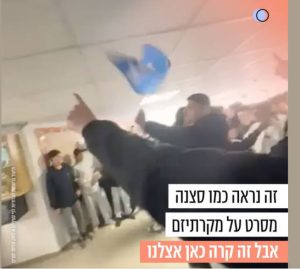 are encountering growing challenges when they seek to engage students in thoughtful, age‑appropriate discussions about current affairs, human rights and developments in Israeli society. Amal Educational Network views the development of informed, curious and responsible citizens as a central part of its educational mission, in line with its vision and its transition to State‑Democratic status. Within this framework, we encourage teachers to open structured, balanced and respectful classroom discussions on issues relating to equality, liberty, human rights and social justice, while maintaining full commitment to the law, to the Ministry of Education’s policies and to the diverse beliefs and backgrounds of our students and their families. Teachers, we believe, may present their own perspectives as part of a broad range of views, while emphasizing that no student is expected to adopt a particular political position.
Amal is committed to standing by its educators when they act professionally, transparently and with educational responsibility, and to providing them with guidance and tools for facilitating complex discussions in a way that strengthens democratic culture rather than polarization. We see great value in cooperation between school staff, students, parents, local authorities and the Ministry of Education to ensure that sensitive topics are addressed in a manner that fosters critical thinking, mutual respect and civic engagement. In doing so, we strive to protect both the dignity of teachers and the right of students to engage with important public issues in a careful, balanced and educationally grounded way, so that incidents of the kind seen recently become opportunities for deeper learning rather than for fear or silencing.