
Karen Tal: “AI Is a Bridge to Opportunity, Not a Threat”
Amid the rapidly evolving landscape of artificial intelligence, today’s Ynet and Yedioth Ahronoth Education Conference explored one of the most pressing questions in education: what does learning look like when students work side by side with machines and how does the teacher’s role evolve in this new reality?
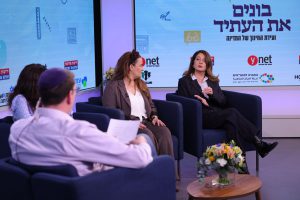
Speaking on the panel, Karen Tal, Director General of Amal Educational Network, emphasized that the AI revolution in education must be understood in a wider social and emotional context. “After the pandemic, the war, and years of disruption for schools and families, AI has entered our classrooms,” she explained. “Ignoring this change is not an option. Just as no one drives today without navigation tools, we cannot ask students or teachers to ignore AI. The real task is understanding how the teacher’s role transforms, how we teach critical thinking, discern truth from misinformation, and use AI to personalize learning while staying alert to its risks.”
Tal shared how Amal’s groundbreaking PAI (Pedagogical AI) Program is leading this transformation across the network’s schools. By integrating AI tools into teaching and learning, Amal is helping educators shift from being mere transmitters of knowledge to mentors guiding students through authentic inquiry and creation. The program enables every student, including those with learning challenges or language barriers, to receive personal guidance and equitable access to advanced learning resources.
At the same time, Tal stressed the importance of balance. “With all respect to the power of AI,” she noted, “we must not lose sight of its potential threats.” She emphasized that educators have a responsibility to ensure students do not spend excessive time in front of screens and instead are encouraged to engage in physical activity, volunteer work, and meaningful social interactions. According to Tal, technology at Amal is always a means to teach young people about values and active citizenship, helping them develop empathy, teamwork, and a deep sense of responsibility. “When our students graduate,” she said, “they should be ready to take an active role in shaping Israel’s future.”
“At Amal,” Tal concluded, “we view AI not as a threat but as a bridge to opportunity. With the right pedagogical framework, it can narrow social gaps and ensure that every learner, regardless of background, has a voice and a future.” She underscored the network’s human-centered approach: “Technology must never replace the human connection. The strength of education lies in people, teachers who inspire, and students who learn with purpose.”
The panel on center–periphery gaps at the conference also highlighted the crucial role of educational networks like Amal in changing this picture. Drawing on new data, Prof. Iris Ben-David Hadar of Bar-Ilan University showed that a student in Israel’s geographic center is up to five times more likely to earn a full matriculation diploma than a peer in the periphery, and that a girl in the center has thirteen times the chance of success compared with a girl growing up in outlying communities. Speakers pointed out that this gap is driven not by talent but by unequal local resources and limited enrichment opportunities, especially in under-resourced municipalities and among communities such as Israelis of Ethiopian descent and Arab and Bedouin students. In this context, Amal’s long-standing work as an educational network serving many schools in the social and geographic periphery — including Arab communities — was cited as a key factor in helping close the historic gap in matriculation eligibility between Arab and Jewish students, demonstrating how targeted investment, tailored support, and strong partnerships with local communities can turn education into a real engine of social mobility.