Understanding Israel’s Educational Network Model
In Israel, public secondary education is not managed solely by the Ministry of Education. Local municipalities and regional councils, particularly those in the country’s geographic and socioeconomic periphery, often lack the administrative capacity to run schools effectively on their own. They therefore delegate full school management to licensed nonprofit educational networks, transferring the per-student funding they receive from the Ministry of Education, along with a management fee, in exchange for the network taking complete responsibility: hiring staff, appointing principals, managing budgets, and ensuring educational quality.
Amal Educational Network has operated in this role since 1928, today serving nearly 30,000 students across 50 schools. Our annual turnover represents this combined flow of public funds, and it is almost entirely consumed by what was designed for: teacher salaries, school administration, and statutory instructional requirements. This is not institutional wealth. It is the cost of keeping schools open.
The Gap Between Operations and Excellence
Government funding covers the floor, not the ceiling. Research by the Taub Center for Social Policy Studies has documented persistent and significant gaps between per-student expenditure in Israel’s center versus its periphery and studies show that attending a school in the periphery is associated with an approximate 11% lifetime wage gap compared to peers educated in Israel’s economic heartland. Meanwhile, Israel’s 2025 state budget has seen billions in coalition funds redirected toward sectoral institutions, further eroding the relative share reaching general public education in the periphery. What remains after covering salaries and operations leaves nothing, not a single shekel, for the programs that actually change life trajectories: innovation centers that bring entrepreneurship and technology education to students who would otherwise never encounter them; student exchange missions that send young entrepreneurs to represent Israel abroad; science labs and maker hubs; nutritional support in vocational and trade schools to ensure students arrive ready to learn; and the extracurricular fabric that makes school a place students choose to be .
Why Your Partnership Rebuilds Israel
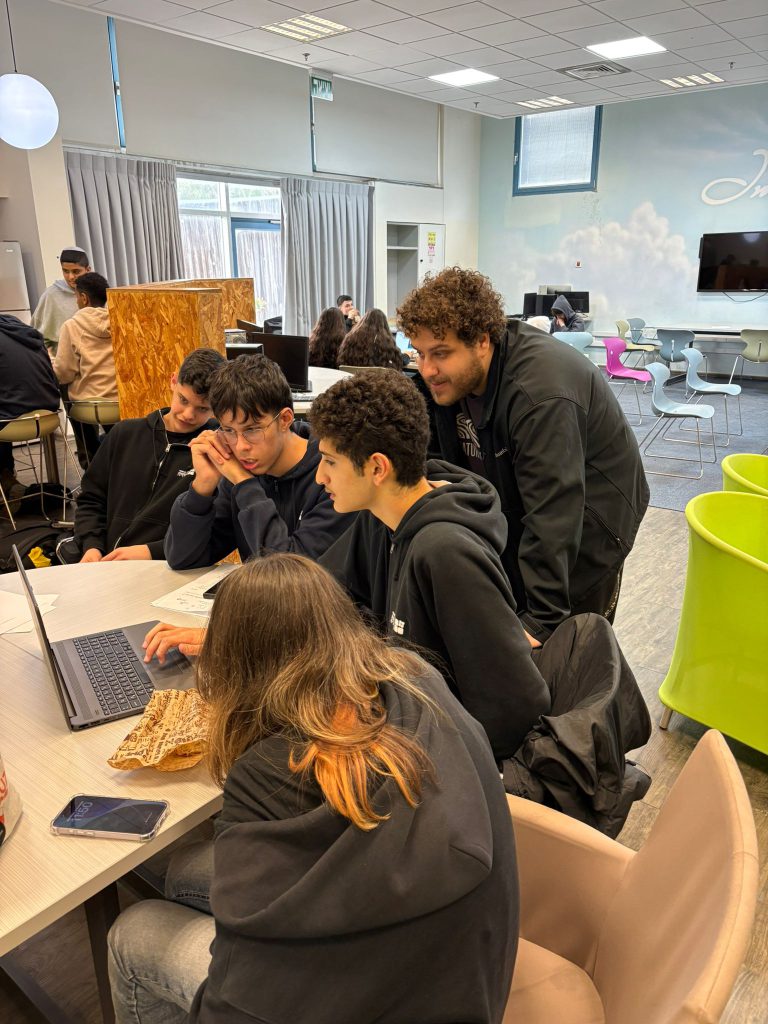
Philanthropy is not a supplement to a well-funded system, it’s the investment that transforms a functioning school into an engine of social mobility and democratic renewal. Amal’s vision is explicit: to make civic engagement, democratic values and a culture of excellence inseparable from everyday school life, across all of Israel’s communities, Jewish and Arab, religious and secular, from the Galilee to the Negev . Our Innovation Centers, PAI program, scholarship initiative, and growing communities are not add-ons; they are the architecture of a just and thriving Israeli society, built one student at a time. The government funds schools. Donors build futures. Together, we rebuild Israel through education and we invite you to be part of that work.