
A New School Year Begins with Challenges, Opportunities and Amal’s Path Forward
A Nation Returns to School
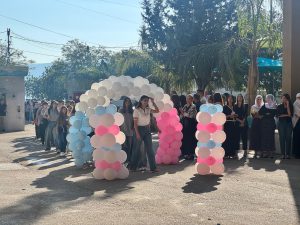
The 2026-2027 school year opened today with approximately 2.6 million students entering Israel’s kindergartens and schools, alongside 260,000 education staff returning to classrooms across the country. Roughly 180,000 children are beginning first grade, while some 159,000 twelfth graders enter their final year in the system. In the North, 4,393 educational institutions welcomed nearly 370,000 students, after three years shadowed by war along the northern border. In the Gaza envelope, enrollment now stands higher than before October 7, 2023: 22,223 children are learning in the region, a 9% increase across the area and 16% in Sderot alone. Perhaps the most moving milestone came from Kibbutz Holit, which lost twenty members on October 7 and whose residents lived in displacement for nearly three years, this week, its early-childhood center reopened for the first time in decades, and the community’s children returned home.
 The Challenges Facing the System
Behind these numbers lies a system under strain. Israel spends 4.7% of GDP on education, more than any other developed country, yet ranks last among OECD nations in budget efficiency, and 35th on the 2022 PISA assessments, with Israeli students falling below the OECD average in all three subject areas. On the 2023 TIMSS exams, Israel plummeted from 9th to 23rd place in mathematics and from 16th to 25th in science, dropping below the international average in science for the first time. Structural problems compound the achievement gap: an estimated 9–12% of every education shekel is lost in bureaucratic intermediaries, sectoral coalition allocations distort priorities, and roughly half of the national education budget flows to school systems that either do not teach core curriculum or do so at a diminished level. Layered on top is what educators call the “invisible bleeding” of the teaching profession. Not only teachers are leaving the profession but thousands more who arrive at school each morning depleted by compassion fatigue, chronic reality shock, and the impossible task of serving as anchor, therapist, and guardians for children still carrying the trauma of war. Add to this rising classroom violence, prolonged learning disruptions, screen addiction, eroded trust between parents and schools, and an election year that will further polarize an aging system and the scale of the challenge comes into focus.
 Reasons for Hope
And yet, this year also brings genuine cause for optimism. A wave of civic awakening across Israeli society has drawn thousands of new professionals into teaching, particularly into the state-secular (mamlakhti) sector — engineers, hi-tech veterans, academics, and retirees who have chosen to redirect their careers toward the classroom at a moment of national need. The Ministry of Education is launching AI-integrated matriculation exams and new artificial-intelligence tracks, opening pathways for schools to address the teacher shortage through intelligent tutoring, personalized learning, and administrative automation that frees teachers to teach. New national frameworks, including expanded STEM programming, financial literacy for grades 9–10, and the “Shorashim” (Roots) identity and values curriculum, offer schools richer tools to work with. Ideas such as an “educational reserves” model, mobilizing academics and professionals as trained backup for classrooms in times of pressure, are moving from op-eds into serious policy conversation. The first week of school has been dedicated nationally to resilience and belonging, on the recognition, long championed by educators, that learning cannot happen apart from a child’s emotional and social world.
 How Amal Is Leading the Way
For Amal Educational Network, these challenges are not abstractions. They are the daily reality of a diverse network serving Jewish and Arab, secular and religious, veteran-Israeli and new-immigrant, urban and periphery communities across the country. Precisely because Amal lives the full mosaic of Israeli society every day, our schools are positioned to lead the change the system needs. We are advancing innovation and civic-values education in tandem, understanding that Israel’s future depends on students who can both build the technologies of tomorrow and sustain a shared belief in the rule of law in a democratic society. We are scaling dedicated programs to address identity, combat violence and strengthen social-emotional resilience, giving educators concrete tools rather than slogans. And we are investing deeply in the close, trust-based relationship between our network headquarters and each of our diverse schools because the collapse of trust between families, teachers, and the system is the deepest wound, and rebuilding it school by school, community by community, is how we restore hope.
Sources: Ministry of Education opening-of-year data; Tkuma Administration figures for the Gaza envelope; Israel Ministry of Finance presentation to the Knesset (June 2026); OECD PISA 2022 and TIMSS 2023 international assessments; internal Amal Network materials.