
Amal’s Delegation to Los Angeles Reflects a New Era in Educational Partnership
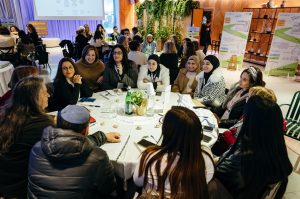
This week, a delegation of principals and teachers from Amal Educational Network schools traveled to Los Angeles for a landmark series of events marking a pivotal milestone in a three-way research collaboration between Amal, the Hebrew University of Jerusalem (HUJI), and UCLA. The delegation, led by Karen Tal alongside Prof. Ron Astor of UCLA and Prof. Mona Houry of HUJI, gathered for an intensive, full-program experience centered on identity, democracy, and the building of educational leadership, bringing together the very educators who are transforming their schools from the inside out. The visit is part of a two-year applied research partnership conducted across seven Amal schools, where researchers accompany principals and teachers as they document and deepen programs addressing identity, Jewish-Arab partnership and civic belonging – programs that range from joint citizenship courses and robotics projects to filmmaking initiatives and heritage preservation.
The timing of this gathering resonates with a broader conversation unfolding across the Jewish philanthropic world. Rebecca Voorwinde, CEO of The Bronfman Fellowship, recently spoke to eJewish Philanthropy about a quiet but significant shift: major funder led leadership programs are closing or restructuring, as a new generation emerges with different perspectives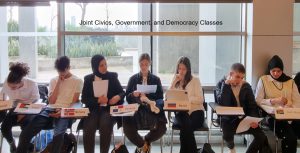 . “There’s a change happening that no one is discussing,” Voorwinde said, noting a direct correlation between generational attitudes toward institutions and the decline of leadership programs as “pet projects” of individual philanthropists. Her call to the community is clear: these programs “don’t just belong to one funder, rather are an asset for the whole Jewish community.” What this generation needs, she argues, is not ideological replication but genuine space to grow: “You see creativity emerge because these individuals were given space to incubate their sense of where they belong and who they are.”
It is precisely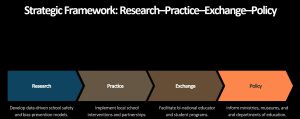 this belief that bringing people together is itself the engine of creativity and leadership that animates the Amal–HUJI–UCLA collaboration. The partnership is designed as a living laboratory where theoretical ideas are translated into policy, curricula, and assessment tools, and tested in real time in both the Israeli and American contexts.
Among its most innovative outputs is a new diagnostic tool for bias and discrimination, developed in partnership with the Los Angeles Holocaust Museum, intended for broad rollout in LA schools and as a potential model for parallel development in Israel. Alongside this, Amal’s AI-based pedagogical platform is being used to connect teachers into professional communities and enable the sharing of teaching units across schools. The partnership with two leading universities creates what Amal views as an essential and urgent bridge between academia and upper secondary education, built to respond to the shifting forces shaping multicultural societies in the 21st century.
At the heart of this work lies Amal’s deep conviction that shared values are not abstract ideals but practical foundations for real change. As a state-democratic, scientific-technological, and multicultural network, Amal has long believed that when educational leaders come together across difference, across schools, cultures, disciplines, and national borders, something transformative happens. The LA delegation is living proof of that conviction: principals and teachers who have been building programs to reduce violence, nurture tolerance, and strengthen a sense of belonging in their own communities are now strengthening their own leadership, together. In an era when philanthropists and institutions alike are rethinking how to invest in the next generation, Amal’s model offers a compelling answer: build the leaders, create the space, and trust that the magic will follow.