
Amal’s Work to Build Safer Schools
On November 17, Amal Educational Network’s Director General, Karen Tal, joined educators and members of Amal’s headquarters team at “It’s in Our Hands,” the annual anti-bullying conference, convened by RGE Media Group in Tel Aviv. At a time of deep divisions in Israeli society, the conference put a question facing families and educators alike on the public agenda: how can schools protect children from violence, bullying, and social exclusion, both in the classroom and online? The urgency was underscored by a national survey: 9% of parents reported that their child had experienced frequent physical violence at school in the 2024–25 school year, up from 4% the year before.

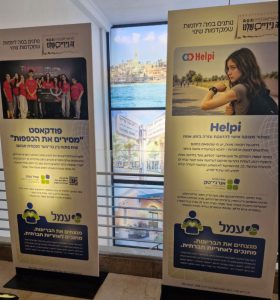
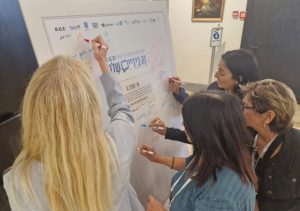
In the opening panel, moderated by education journalist Yael Odem, Tal joined leaders from the Office of the President, local government, the national parents’ association, and Israel’s national child online protection bureau, as well as a specialist who advises school teams on social exclusion. Together, they examined what gets in the way of an effective response to bullying and what schools can do to make students safer. When panelists were asked what one thing they would change the very next morning to counter violence and exclusion, Tal answered not with a speech, but with a simple hand gesture. She invited schools to make it part of their daily routine, showing how a small action, repeated every day, can be the beginning of deeper change.
That idea reflects the work already underway at Amal. Under Tal and Tamar Peled-Amir, Amal’s Head of Education, Research and Technology, the network is pursuing a range of initiatives to prevent violence and build more inclusive school communities. One is an international research partnership with the Hebrew University of Jerusalem and the University of California, Los Angeles (UCLA), involving schools across the Amal network. Principals, working with teachers and students, are leading projects that foster tolerance and help students and educators explore their own identities while learning to respect those of others. From joint projects that bring students from different communities together to documentary filmmaking that gives young people a way to express who they are, Amal is making belonging part of what students learn and practice at school.