
Karen Tal’s Vision for a New Israeli Rite of Passage
Karen Tal, Director General of the Amal Network, has put forward a bold national proposal to transform the final year of Israeli high school into a formative year of purpose, service, and inspiration. In an op-ed published in Ynet, Tal argues that 12th grade suffers from a deep structural gap: formal studies and matriculation exams effectively end by March, leaving students adrift for months in which the education system loses its grip as time slips away.
 Her solution is to conclude formal academic learning in 11th grade and dedicate 12th grade to a new integrated model that combines the best elements of Israel’s pre-military preparatory academies (“Mechinot”) and its service-year programs, extended for the first time to every young person in the country: state, state-religious, Arab, and Haredi alike. Today, she notes, only about 12% of each cohort participates in such frameworks, and the vast majority come from affluent, established communities. What was meant to be a national asset has quietly become a sectoral privilege. Tal calls on the Prime Minister and Education Cabinet to elevate the initiative into a national flagship program, launched as a nationwide pilot within a year.
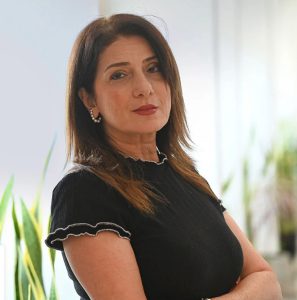 Tal’s proposed model rests on three interwoven pillars. The first is skills and practical experience: a “life lab” in which young people learn independence, cooperation and communal responsibility through the concrete work of running a shared apartment, managing a joint budget, and meeting complex, creative challenges. The second is learning and identity: a period of deep reflection in the wake of the COVID-19 crisis and the ongoing war, in which students clarify their values, strengthen their psychological and national resilience, and renew their connection to Israel as a Jewish and democratic state. The third is social action: genuine encounter with the many faces of Israeli society through volunteering in the field, where young people meet communities different from their own, build empathy, and take real responsibility for others. For Arab and Haredi youth in particular, whose participation rates in continuation programs remain low, this year would serve as a crucial bridge and a first accessible gateway into the wider civic fabric of the country. As Tal writes, “Only in this way will we turn 12th grade into a year of inspiration.”
This vision is a natural extension of everything the Amal Network stands for. Across our schools, in Jewish and Arab towns, in cities and small villages, Amal has long served as an anchor for educators and families who believe that Israeli education must belong to all of Israeli society, not to the fortunate few. Karen Tal’s proposal reflects the network’s core conviction that opportunity and civic belonging should never depend on the neighborhood a child was born into. By calling for a shared national year that gives every young Israeli a strong foundation for life, service, and mutual responsibility, Amal is once again leading the way for the entire country. As Tal declares, “The time has come.”